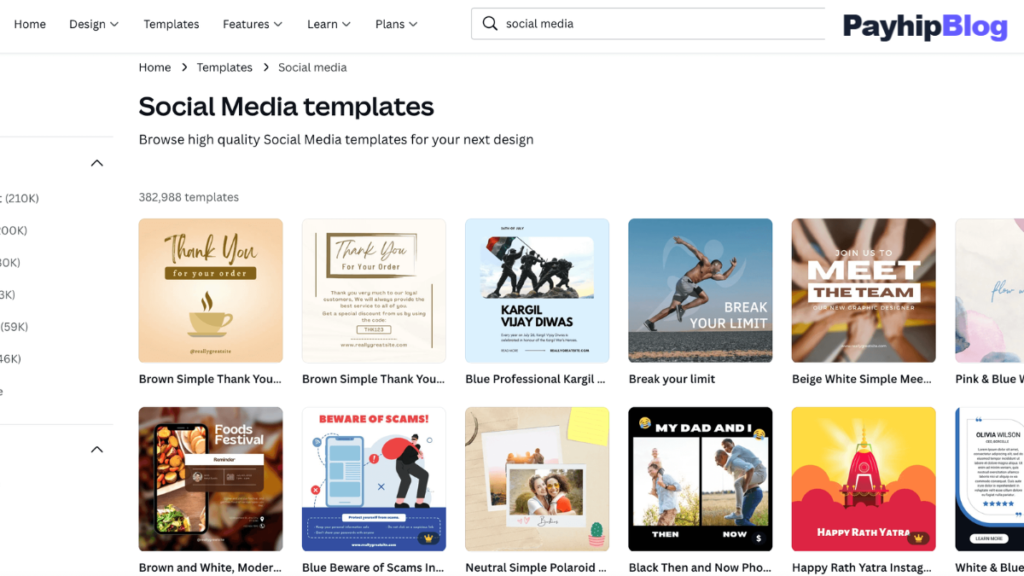
how to sell templates on Payhip Selling templates online can be a practical way to turn useful design or organizational skills into digital products. A template does not need to be a complicated piece of software. It can be a Canva social media kit, an Excel budget planner, a Notion workspace, a resume template, a business invoice, a content calendar, or a collection of editable documents how to sell templates on Payhip.
One reason templates are interesting as digital products is that you create the file once and can offer it to multiple customers. The real work is usually not the upload itself. It is choosing a useful problem to solve, making the template easy to edit, presenting it clearly, and giving buyers enough information to know exactly what they are purchasing how to sell templates on Payhip.
Payhip can be used to set up a storefront for these digital products without building a complete ecommerce website from scratch. If you are starting with a small collection of templates, that can make the process much easier how to sell templates on Payhip.
I have found that the simplest approach is to treat a template like a small product rather than just a downloadable file. The customer should immediately understand what it does, who it is for, what is included, and how they will use it how to sell templates on Payhip.
What Types of Templates Can You Sell on Payhip?
Before opening your Payhip store, decide what type of template you want to create. There are many possibilities, but the best starting point is usually something you already understand how to sell templates on Payhip.
For example, a student might create:
- Study planners
- Assignment trackers
- Class schedules
- Presentation templates
- Research project planners
- Resume templates
A small business owner could create:
- Invoice templates
- Expense trackers
- Business proposal templates
- Client onboarding documents
- Social media calendars
- Content planning sheets
A content creator might sell:
- Instagram post templates
- YouTube thumbnail templates
- Pinterest templates
- Media kits
- Content calendars
- Brand guideline templates
You can also create templates for Notion, Microsoft Excel, Google Sheets, Canva, Microsoft Word, PowerPoint, and other popular tools how to sell templates on Payhip.
The important part is not simply choosing a popular category. Your template needs to solve a specific problem.
For example, “Business Template Pack” is quite broad. Something like “Simple Monthly Expense Tracker for Freelancers” tells a potential customer much more about the product how to sell templates on Payhip.
Start With a Specific Customer
One mistake I would avoid is designing a template first and trying to find a customer afterward.
Instead, think about the person who will use it.
Imagine you want to create a Canva template pack. You could target almost anyone, but a more focused product might be:
“Editable Instagram Templates for Local Coffee Shops”
Now you have a clearer idea of what the product should look like. You can use coffee-related layouts, menu announcements, promotional posts, customer testimonials, seasonal offers, and opening-hour posts.
The same principle works with spreadsheets.
Instead of creating a generic spreadsheet called “Budget Planner,” you could make a “Monthly Budget Planner for College Students how to sell templates on Payhip.”
Choose the Right Tool for Your Template
The software you use depends on what you are creating.
Canva Templates
Canva is useful for visual products such as social media graphics, flyers, presentations, planners, worksheets, and business documents.
When selling a Canva template, you need to make sure the design and included assets comply with Canva’s current licensing and usage rules. Do not assume that every element available in a design tool can automatically be redistributed as part of a commercial template how to sell templates on Payhip.
Microsoft Excel and Google Sheets
Spreadsheets work well for calculators, trackers, planners, budgets, inventory sheets, and business tools how to sell templates on Payhip.
For example, you could create a freelancer finance spreadsheet containing sections for:
- Monthly income
- Business expenses
- Client payments
- Outstanding invoices
- Monthly totals
Adding formulas can make a simple spreadsheet much more useful how to sell templates on Payhip.
Notion
Notion templates can be useful for project management, studying, content planning, habit tracking, personal organization, and business workflows.
A Notion product might contain several connected pages rather than a single document.
Microsoft Word
Word templates are suitable for resumes, letters, proposals, invoices, reports, forms, and other text-heavy documents.
PowerPoint
PowerPoint templates can be useful for business presentations, educational presentations, pitch decks, and portfolio presentations.
The important thing is to choose software your target customer already knows. A beautiful template is less useful if the buyer needs unfamiliar software just to edit it how to sell templates on Payhip.
Create Your First Template
Once you have selected your audience and software, start building the actual product.
Suppose you decide to create a social media template pack for small businesses.
Instead of making 100 designs immediately, start with a smaller collection.
For example:
- 10 promotional posts
- 5 testimonial posts
- 5 announcement posts
- 5 educational posts
- 5 quote posts
That gives you 30 templates.
Make sure they look like part of the same product. Use consistent typography, spacing, layouts, and design elements how to sell templates on Payhip.
Then test them yourself.
Open the files on your laptop and, where practical, check them on your phone as well. Try changing the text, replacing an image, moving an element, and exporting the finished design.
This is where you can discover problems that are easy to miss while designing how to sell templates on Payhip.
A text box might be too small. A formula might be incorrect. A page might look fine on a desktop but be difficult to use on a mobile screen.
Testing before selling can save you from unnecessary customer complaints later.
Make a Simple Delivery File
Your Payhip product does not necessarily have to be one giant file how to sell templates on Payhip.
For example, imagine you are selling a Canva template pack.
You could create a PDF called “Start Here.”
Inside it, explain:
- What the customer purchased
- How to access the template
- How to make a copy
- How to edit the design
- How to download the finished files
- Where to get support
The PDF can contain the appropriate template access information or instructions.
For an Excel product, you might provide the .xlsx file together with a short PDF guide.
For a Notion product, you can provide clear duplication instructions and explain how the workspace is organized.
The goal is to make the first five minutes after purchase as easy as possible how to sell templates on Payhip.
Create Your Payhip Product
After preparing your files, you can create a product in your Payhip account.
The exact appearance of the dashboard can change over time, but the basic workflow is straightforward: create a digital product, enter its information, upload the relevant files, set your price, and publish it how to sell templates on Payhip.
Give your product a specific title.
Instead of:
“Awesome Template Pack”
use something descriptive such as:
“30 Editable Instagram Templates for Small Businesses”
The second title immediately tells customers what they are buying.
Write a product description that answers the questions a buyer is likely to have.
Explain:
- What is included
- Who the template is for
- Which software is required
- Whether the files are editable
- What file formats are included
- How the customer receives the product
- What is not included
- Whether commercial use is allowed
Avoid promising something your product does not provide.
If your template requires Canva, clearly state that. If the customer needs a particular version of Microsoft Excel, explain that where relevant how to sell templates on Payhip.
Use Product Preview Images
Your product images are extremely important because customers cannot physically examine a digital template.
Suppose you are selling a planner with 20 pages. Do not simply upload a single screenshot of the cover.
Show several useful pages.
You might create preview images showing:
- Cover page
- Weekly planner
- Monthly planner
- Goal tracker
- Notes page
- Example filled-in page
A clean mockup can help customers understand how the product looks when used how to sell templates on Payhip.
You can create these preview graphics with tools such as Canva, Photoshop, or other image-editing software.
Make sure the preview does not give customers the impression that something is included when it is not.
For example, if your template preview contains decorative stock photographs that are not included in the purchase, say so clearly how to sell templates on Payhip.
Decide How Much to Charge
Pricing digital templates can be confusing when you are starting.
There is no single correct price because templates vary greatly in complexity, usefulness, quality, and target audience.
A simple one-page spreadsheet and a 100-page business template library should not necessarily have the same price how to sell templates on Payhip.
Think about the value and work involved.
Ask yourself:
- How much time does the template save?
- How many pages or files are included?
- How customizable is it?
- Does it include formulas or automation?
- Does it solve a specific business problem?
- Is there a helpful guide included?
- How polished is the design?
You can also examine similar products in the same category to understand the general market range. However, do not simply copy another seller’s price or product structure how to sell templates on Payhip.
A small beginner product can be priced modestly while you learn what customers actually want how to sell templates on Payhip.
Make Your License Clear
Licensing is one of the areas where template sellers should be careful.
A customer needs to know what they can and cannot do with the template.
For example, you might allow a customer to use an edited template for their own business but prohibit them from reselling or redistributing the original editable templaten how to sell templates on Payhip.
Your license could explain:
- Personal use
- Commercial use
- Number of users
- Whether redistribution is prohibited
- Whether resale is prohibited
- Whether the template can be modified
The exact license depends on your product and business model.
Also pay attention to the licenses of fonts, images, icons, graphics, and other assets used in your template. You should not assume that an asset can be redistributed merely because it was available in a design application how to sell templates on Payhip.
Write a Useful Product Description
A product description should sound like a person explaining the product, not a list of marketing slogans.
Start by describing the problem.
For example:
“If you spend too much time creating social media graphics from scratch, this template pack gives you ready-made layouts that you can customize with your own text, colors, and images how to sell templates on Payhip.”
Then explain what the buyer receives.
You can include a simple section such as:
You will receive:
- 30 editable templates
- A quick-start PDF
- Template access instructions
- Basic editing instructions
Then explain who the product is suitable for.
This helps visitors decide quickly whether the product matches their needs how to sell templates on Payhip.
Test the Customer Experience Before Publishing
This is one step that is easy to skip.
Before sending real customers to your product page, test the entire experience yourself.
Check the product page on Chrome.
Then open it on your phone.
Look at the product title.
Read the description.
Check the images.
Make sure the price is correct.
Check the delivery files.
Open every file.
Click every relevant link.
If possible, ask someone who has not seen the product before to test the instructions.
You may discover that you understand your own template so well that your instructions make sense to you but not to a first-time buyer.
Promote Your Payhip Templates
Publishing a product is only one part of selling it.
People need a way to discover it.
You can use platforms that match your target audience.
For visual templates, Pinterest and Instagram can be useful places to demonstrate designs.
For business templates, LinkedIn can be relevant depending on your audience.
For educational templates, YouTube, Pinterest, or relevant communities may be useful.
You can also create short videos showing the template being used.
For example, if you sell an Excel budget template, record a short screen demonstration:
“Here is how I enter monthly income.”
Then show the expense section.
Then show the automatic calculation.
This gives potential customers a much better understanding of the product than a static advertisement.
Do not spam communities with product links. Contribute useful information first and follow each platform’s rules.
Use Free Products Carefully
One strategy for a new store is to create a small free template.
For example, if you sell business spreadsheets, you could offer a basic monthly expense tracker for free and sell a larger business finance bundle.
The free product should still be genuinely useful.
It can demonstrate your design quality and give potential customers a chance to understand how your products work.
However, don’t make the free version intentionally broken just to force an upgrade. A useful free product creates a better first impression.
Common Mistakes New Template Sellers Make
Creating Too Many Templates
You do not need 200 products before launching.
A small collection of well-tested products can teach you more than a huge collection that nobody has properly tested.
Making Products Too Generic
A template that tries to serve everyone often becomes difficult to market.
Specific audiences make it easier to explain the product.
Poor Instructions
A buyer should not have to contact you just to understand how to open the file.
Include basic instructions.
Ignoring Mobile Users
Many customers browse products from smartphones even if they eventually use the template on a computer.
Check how your product page and preview images appear on smaller screens.
Using Assets Without Checking Rights
This can create serious problems.
Check the commercial and redistribution permissions of fonts, photographs, illustrations, icons, and other assets used in your products.
Forgetting Updates
Software changes.
Template links can stop working.
Instructions can become outdated.
If you discover an important problem after publishing, update the product files and communicate the change to customers where appropriate.
What Results Should You Expect?
It is better to approach template selling with realistic expectations.
You might publish a product and receive no sales initially. That does not automatically mean the template is bad.
There can be several reasons:
- The product is difficult to discover.
- The audience is too broad.
- The product page is unclear.
- The preview images are weak.
- The price does not match the perceived value.
- The template solves a problem that people do not urgently have.
- You are promoting it in places where your target customers are not present.
Instead of immediately creating another 50 templates, look at what is happening.
If people view the product but do not purchase, review the product page and offer.
If people never discover it, work on distribution and content.
If customers repeatedly ask the same question, improve your instructions.
Treat these observations as feedback.
A Simple First Product Plan
If I were starting a Payhip template store from scratch, I would keep the first project manageable.
I would choose one audience.
Then I would identify one common problem.
Next, I would create one useful template that solves that problem.
After testing it, I would create a clear product page with several preview images.
I would prepare a short instruction guide and a simple license.
Then I would publish the product and create useful content demonstrating how it works.
After collecting real feedback, I would improve the product before creating related templates.
For example, if the first product were a freelancer invoice template, the next products could naturally include a client expense tracker, project planner, proposal template, and client onboarding checklist.
That creates a product family instead of a random collection of files.
Final Thoughts
Selling templates on Payhip is less about uploading a file and more about creating something that makes another person’s work easier.
A good template saves time, reduces repetitive work, provides a clear starting point, or helps someone produce a more professional result. The software you use is secondary to the problem you solve.
Start small. Pick a specific customer, create one genuinely useful product, test it carefully, explain exactly what buyers receive, and make the instructions easy to follow. Then use customer questions and sales data to decide what to improve next.
That approach is much more sustainable than filling a store with dozens of rushed templates and hoping something sells.
If you are building a template business, I can also create a practical 10-product Payhip template store plan with product ideas, target customers, pricing ranges, and promotion channels.
Next Read: how to sell printables on Payhip