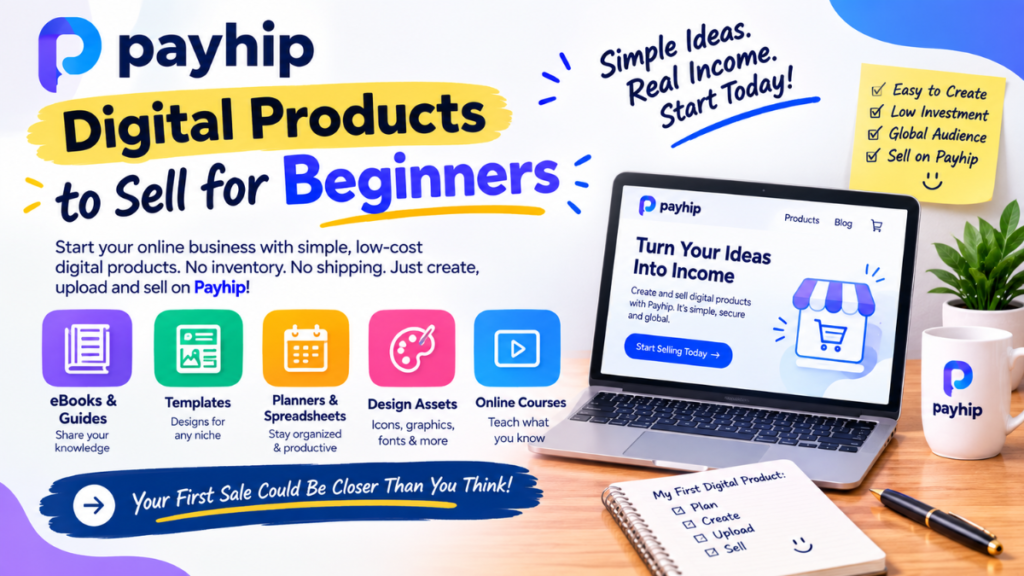
digital products to sell for beginners The first time I looked into selling digital products, I made the same mistake many beginners make: I thought I needed to create something complicated.
I imagined building an online course, designing a professional app, or creating a huge library of downloadable resources. That made the whole idea feel much harder than it needed to be digital products to sell for beginners.
The reality is different.
A digital product can be something as simple as a useful spreadsheet, printable planner, checklist, template, guide, or collection of graphics. You create it once, upload it to a selling platform, and customers can usually receive it automatically after purchasing digital products to sell for beginners.
That does not mean digital products are effortless. You still need a useful idea, decent presentation, customer support, and a way to get people to notice your product. But you don’t necessarily need advanced technical skills or a large budget to get started digital products to sell for beginners.
If you’re a beginner, the best place to start is usually with a small product that solves one specific problem.
What Counts as a Digital Product?
A digital product is something a customer can buy and receive electronically instead of getting a physical item delivered.
Some common examples include:
- PDF guides and ebooks
- Printable planners
- Budget spreadsheets
- Resume templates
- Canva templates
- Social media templates
- Notion templates
- Excel trackers
- Digital worksheets
- Checklists
- Presentation templates
- Lightroom presets
- Icons and graphics
- Study notes and revision planners
- Website templates
- Small online courses
- Digital calendars
You don’t have to create something completely new.
For example, there are thousands of budget spreadsheets online. That doesn’t automatically mean another budget spreadsheet is pointless. A beginner-friendly monthly budget tracker designed specifically for college students is a much more focused product digital products to sell for beginners.
The important question is not, “Has anyone made this before?”
A better question is:
“Can I make something useful for a particular type of person?”
1. Printable Planners and Trackers
Printable products are one of the easiest places for beginners to experiment.
You can create a weekly planner, meal planner, habit tracker, cleaning checklist, study timetable, wedding checklist, or simple daily organizer digital products to sell for beginners.
You don’t even need expensive design software.
For example, you could use Canva to create a clean A4 planner with:
- A weekly schedule
- Three important tasks
- A small notes section
- A habit tracker
- A section for upcoming deadlines
Export it as a PDF and test the product yourself before selling it.
One mistake I would avoid is adding too many features. Beginners often think a $5 product needs 50 pages.
It doesn’t.
A simple five-page planner that is genuinely easy to use can be more useful than a 60-page document that feels cluttered.
A practical way to make one
- Choose one audience.
- Pick one problem they have.
- Sketch the pages on paper first.
- Build the design in Canva or another design tool.
- Print it or open the PDF on your phone and computer.
- Check margins, text size, spelling, and alignment.
- Create a few preview images.
- Upload the finished files to your chosen marketplace.
Try using your own product for several days. You’ll notice problems that are easy to miss while designing.
Maybe the writing space is too small. Maybe the checkboxes are difficult to click in the digital version. Maybe a page that looked good on your laptop is awkward when printed digital products to sell for beginners.
Those small details matter.
2. Spreadsheet Templates
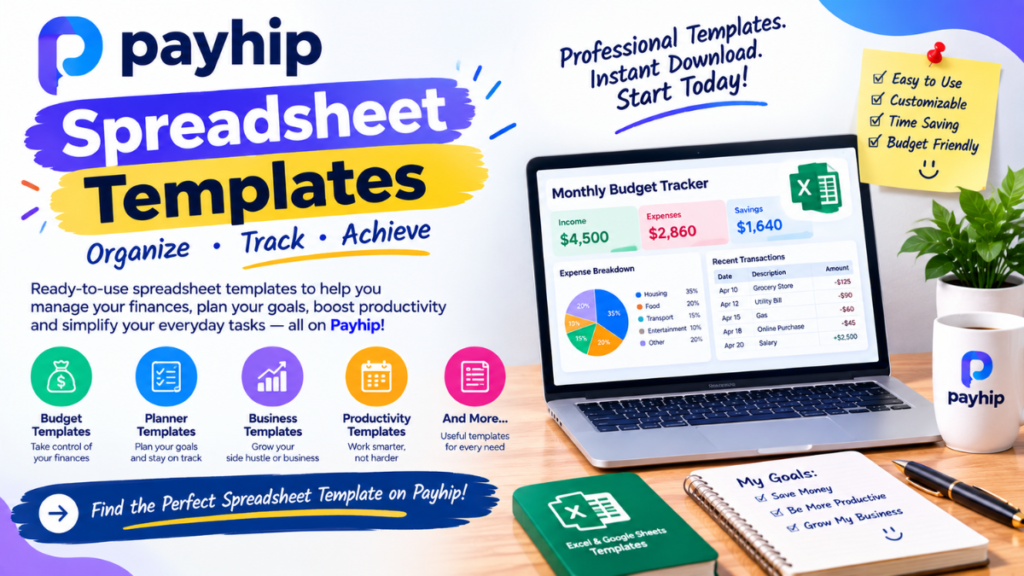
If you are comfortable with Excel or Google Sheets, spreadsheets can be excellent digital products.
You don’t have to be an accountant or data analyst.
Think about everyday tasks people already use spreadsheets for:
- Monthly budgets
- Freelance income tracking
- Expense tracking
- Inventory management
- Project planning
- Content calendars
- Workout tracking
- Savings goals
- Student assignment tracking
One product I would consider for beginners is a simple freelancer income tracker.
It could have separate sections for:
Income: client, project, date, amount
Expenses: software, advertising, equipment, other costs
Summary: monthly income, expenses, and remaining amount
You can add basic formulas so totals calculate automatically.
Before selling it, test the spreadsheet with fake information. Enter 20 or 30 transactions and make sure the formulas still work.
Also open it in both Excel and Google Sheets if you advertise compatibility with both.
A common beginner mistake is creating a spreadsheet that looks impressive but is annoying to use. Customers generally care more about whether it saves them time than whether it contains complicated formulas digital products to sell for beginners.
3. Canva Templates
Canva has made it much easier for non-designers to create professional-looking templates.
You can create templates for:
- Instagram posts
- Pinterest graphics
- Business flyers
- Presentations
- Resumes
- Menus
- Media kits
- Price lists
- Event invitations
- Small-business promotions
Instead of creating a generic “social media template pack,” consider choosing a specific customer.
For example:
Social Media Templates for Local Coffee Shops
That’s much more specific.
You could include templates for:
- New menu announcements
- Weekend promotions
- Customer reviews
- Opening hours
- New product announcements
- Seasonal offers
The more clearly the product fits a real situation, the easier it is for a potential customer to understand why they might need it.
Always check the current licensing and usage rules of any platform, font, photo, graphic, or other asset you include.
4. Notion Templates
Notion templates have become popular because people use Notion for everything from project management to personal organization digital products to sell for beginners.
If you already use Notion regularly, you have an advantage: you can build something around a workflow you understand.
Possible products include:
- Student dashboards
- Content calendars
- Reading trackers
- Project management systems
- Freelance client dashboards
- Job application trackers
- Personal finance dashboards
- Goal planners
For example, a freelancer dashboard could contain:
Dashboard → Clients → Projects → Tasks → Deadlines → Notes
The important part is testing the workflow.
Create a duplicate of your template and pretend you’re a new customer. Can you understand where everything goes without watching a 30-minute tutorial digital products to sell for beginners?
If not, simplify it.
A beautiful dashboard that takes an hour to understand isn’t necessarily a good beginner product.
5. Resume and Cover Letter Templates
Job seekers regularly need help presenting their information clearly.
A resume template can be a straightforward digital product if you understand basic document formatting.
You could create versions for:
- Recent graduates
- Students
- Designers
- Administrative workers
- Freelancers
- Software developers
- People changing careers
Keep the design professional and readable.
Don’t fill the template with fake achievements or exaggerated claims. Instead, provide helpful placeholder text showing customers what type of information belongs in each section digital products to sell for beginners.
You can also include a short instruction PDF explaining how to customize the template.
That small addition can make the product easier for beginners to use.
6. Checklists and Short Guides
Not every digital product needs to be a large ebook.
A short, practical guide can be much easier to create.
Imagine someone wants to start a small YouTube channel.
Instead of writing a 100-page book about YouTube, you could create a beginner checklist covering:
- Choose a channel topic.
- Create the channel.
- Write a simple description.
- Set up basic branding.
- Record the first video.
- Edit the video.
- Create a thumbnail.
- Upload and check the description.
- Review the analytics after publishing.
The value comes from making the process easier to follow.
Other examples include:
- New apartment cleaning checklist
- First-time travel packing checklist
- Freelance client onboarding checklist
- Small-business social media checklist
- Exam preparation checklist
- New employee onboarding checklist
Keep the information accurate and don’t make claims you cannot support.
7. Digital Study Materials
Students are another potential audience for digital products.
You could create:
- Revision planners
- Flashcard templates
- Study schedules
- Essay planning worksheets
- Subject-specific practice materials
- Note-taking templates
- Exam preparation checklists
The key is originality.
Don’t simply copy a textbook, teacher’s material, paid course, or another creator’s notes and sell them.
Instead, create your own structure, explanations, exercises, or organizational tools.
For example, a “30-Day Exam Revision Planner” could contain daily study targets, revision checkboxes, practice-test tracking, and space for difficult topics digital products to sell for beginners.
The product doesn’t need to teach the entire subject. It can help students organize the work they already need to do.
8. Social Media Content Packs
Small businesses often need content but don’t always have time to create it from scratch.
A digital content pack might contain:
- Caption prompts
- Post templates
- Story templates
- Content ideas
- Promotional graphics
- A monthly content calendar
Again, niche selection can make a big difference.
Instead of creating something for “all businesses,” create something for a particular type of business.
Examples:
- Instagram templates for salons
- Content prompts for real estate agents
- Social media graphics for restaurants
- Promotional templates for fitness trainers
- Post ideas for photographers
This approach also makes it easier to understand what the customer actually needs.
Where Can Beginners Sell Digital Products?
You have several options, and the right one depends on what you’re selling and where your customers are.
Etsy
Etsy is commonly used for downloadable products such as printables, templates, planners, and artwork.
The advantage is that customers are already visiting the marketplace looking for products.
The disadvantage is competition. Your product still needs good presentation, clear descriptions, and useful previews.
Gumroad
Gumroad can be useful for selling files, guides, templates, ebooks, and other digital products directly.
It can work particularly well if you already have an audience on social media, YouTube, a newsletter, or a website.
Your Own Website
A website gives you more control over branding and customer relationships.
You might use a platform such as Shopify or another ecommerce system with digital-download functionality.
The downside is that you’ll generally need to bring your own traffic.
For a complete beginner, I wouldn’t spend a large amount of money building a complicated website before knowing whether anyone wants the product digital products to sell for beginners.
Start small.
How to Choose Your First Digital Product
Here’s a simple exercise I find useful.
Write down five things you know how to do reasonably well.
For example:
- Organizing personal finances
- Making presentations
- Planning workouts
- Designing in Canva
- Organizing study schedules
Now write down problems people have around those skills.
For presentation design:
Problem: Small business owners don’t know how to make a clean presentation.
Possible product: A customizable business presentation template.
For budgeting:
Problem: People lose track of monthly expenses.
Possible product: A simple monthly budget spreadsheet.
For studying:
Problem: Students don’t know how to organize revision.
Possible product: A four-week revision planner.
This exercise is much more useful than starting with, “What digital product is trending?”
Trends change. Problems tend to stick around.
A Beginner-Friendly Product Creation Process
If I were starting again with little money, I’d keep the first project deliberately small.
Step 1: Pick one customer
Don’t target everyone.
Choose something like:
“University students who need help organizing exam revision.”
That’s specific enough to guide the product.
Step 2: Find one annoying problem
Look at questions people ask in communities, forums, social media comments, and conversations.
Pay attention to repeated problems.
Step 3: Build the smallest useful solution
Don’t spend three weeks making something before checking whether the idea makes sense.
Create a basic version first.
Step 4: Test it yourself
Use the product on your phone, laptop, or tablet.
Print it if customers are expected to print it.
Open spreadsheets and test formulas.
Click every link.
Check every page.
Step 5: Show it to a few people
Ask them what is confusing.
Don’t simply ask, “Do you like it?”
Ask:
- What would you change?
- What wasn’t clear?
- What did you expect to see?
- Would you actually use this?
- Which part was most useful?
Those answers are much more valuable.
Step 6: Create clear product images
A customer can’t physically pick up a digital product.
Your preview images need to show what they are buying.
Include screenshots, page previews, features, file formats, and important compatibility information.
Never make the preview misleading.
Step 7: Write an honest description
Explain exactly what the customer receives.
For example:
Includes:
- 1 PDF planner
- 1 editable Canva template
- A4 and US Letter versions
Don’t say “instant success,” “guaranteed income,” or similar claims.
You’re selling a tool, not a guaranteed result.
Mistakes I Would Avoid
One of the biggest mistakes beginners make is trying to build a huge product immediately.
A 100-page ebook sounds impressive, but it also takes considerably more time to research, write, edit, format, and maintain.
Another mistake is copying whatever appears popular.
If you see ten people selling planners, that doesn’t mean you need to make the eleventh identical planner.
Look for a narrower problem.
Pricing is another area where beginners can get stuck.
There isn’t one universal “correct” price. A simple printable may be inexpensive, while a detailed professional template system can reasonably cost more. Look at similar products, consider the amount of work and usefulness involved, and test your pricing over time digital products to sell for beginners.
Also remember that sales are not guaranteed.
You might create a good product and get very few sales initially. That doesn’t automatically mean digital products don’t work. It could mean the product needs better positioning, the audience isn’t finding it, the listing needs improvement, or the problem isn’t important enough digital products to sell for beginners.
That’s useful information.
What You Actually Need to Get Started
You don’t need a giant setup.
A beginner could potentially start with:
- A laptop or tablet
- Canva for visual design
- Google Docs for writing
- Google Sheets or Excel for spreadsheets
- Notion for workspace templates
- A marketplace or storefront for selling
- A simple payment method supported by the platform
- A folder system for organizing product files
Keep your costs under control.
I would rather spend time improving a product than buying ten subscriptions before making the first sale.
Also keep copies of your original files somewhere safe. Use clear file names and folders so you can quickly update a product later.
The Product Doesn’t Have to Be Perfect
This is probably the most important lesson for a beginner.
Your first digital product is partly a learning project.
You’ll learn how customers behave, what questions they ask, which designs are confusing, what file formats cause problems, and how much time different products take to create digital products to sell for beginners.
Maybe your first product gets five sales.
Maybe it gets none.
Maybe one customer sends a message saying, “This would be much more useful if it included a Google Sheets version.”
That feedback is valuable.
Instead of immediately abandoning the idea, you can improve the product based on what you’ve learned.
Over time, you may end up with a small collection of related products rather than one giant product that took months to create.
Final Thoughts
Selling digital products can be a practical side project for beginners because the starting point can be surprisingly simple.
You don’t need to know how to code. You don’t need a warehouse. You don’t need to create a massive course.
Start with something you understand and solve one small problem well.
A useful spreadsheet, clean template, practical checklist, or simple planner may not sound revolutionary—and that’s fine. Customers aren’t necessarily looking for something revolutionary. Often, they’re looking for something that saves them time, keeps them organized, or makes an annoying task easier digital products to sell for beginners.
Create something you would genuinely use yourself. Test it carefully. Listen to feedback. Improve it instead of constantly jumping to a new idea digital products to sell for beginners.
That’s a much more realistic way to approach your first digital product.